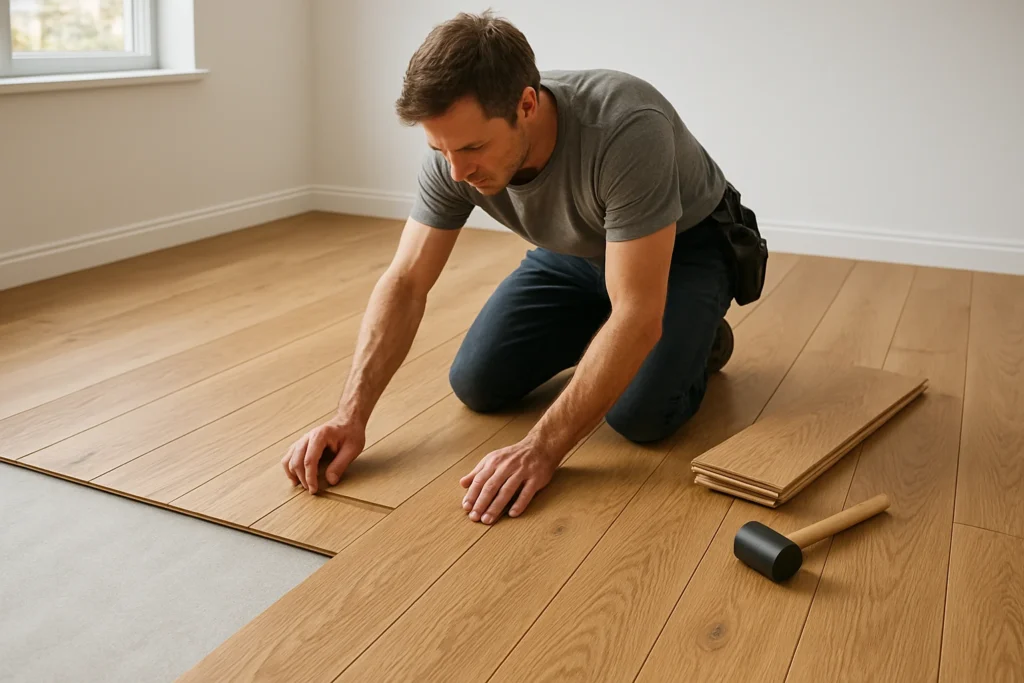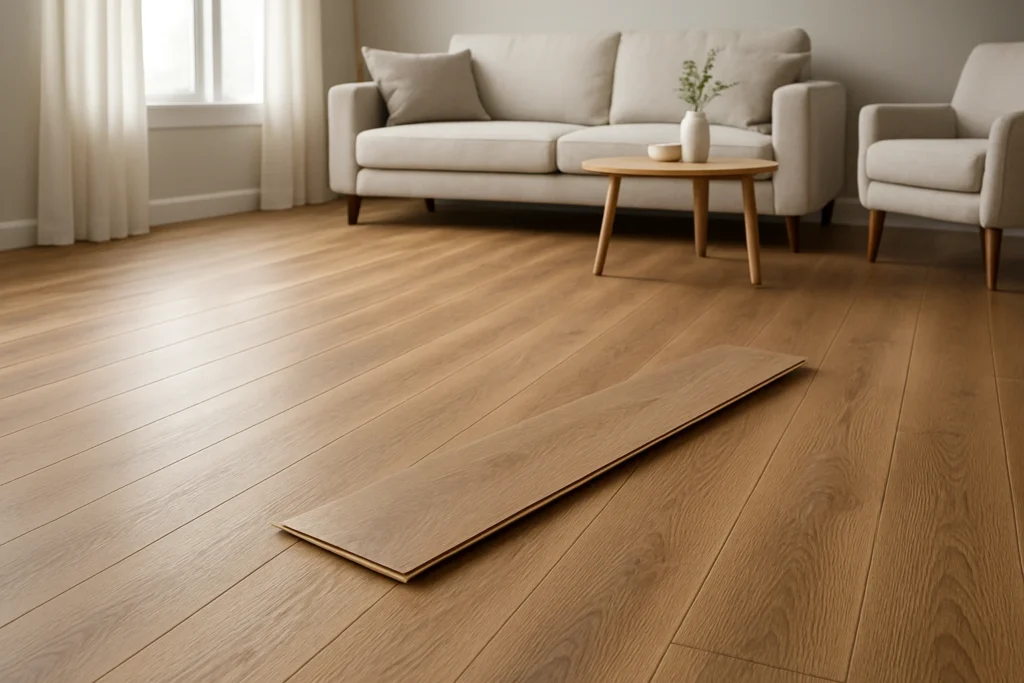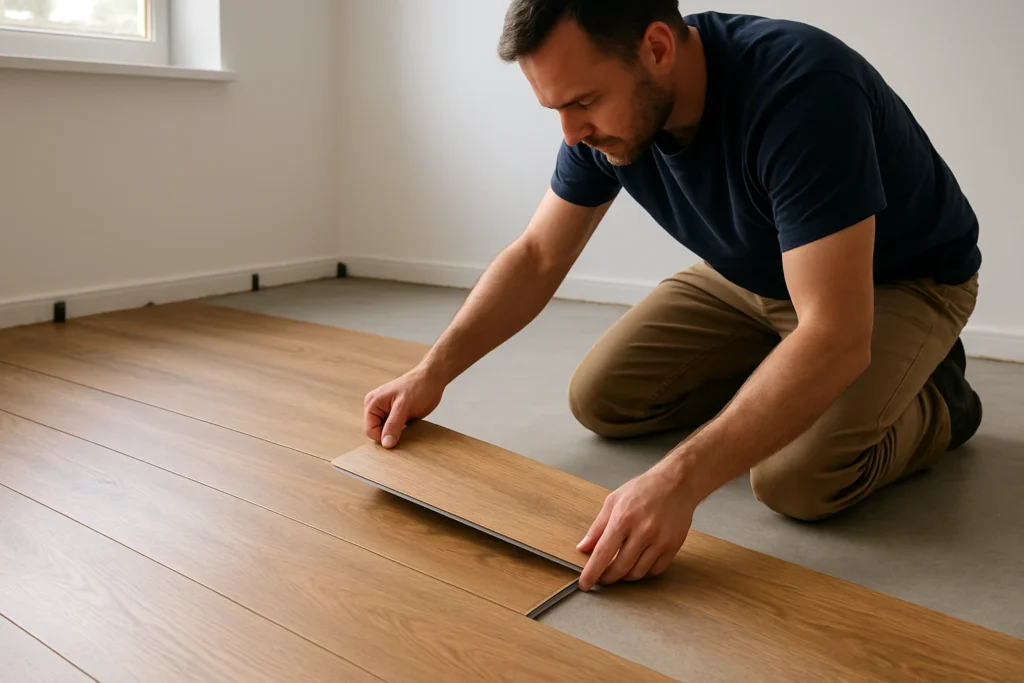


When deciding whether to go with SPC flooring or LVT flooring, you may end up getting confused since both are available in the form of wood or stone, but require minimal upkeep as compared to natural wood or stone. Both are vinyl flooring types, both come in nice designs and both are suitable for homes as well as commercial spaces.
The key point is that there’s something behind the pretty facade.
SPC flooring features a rigid stone-plastic composite core that makes the plank more rigid and resistant to changes in size and shape. LVT flooring is more flexible, constructed to give a softer, more resilient feel underfoot.
So, which one is better?
There’s no right or wrong answer. The correct one to use will depend on the room, the subfloor, the amount of foot traffic in the room, the amount of moisture the room will encounter, the comfort level desired, how the room will be installed, and what type of finish is desired.
When looking at types of flooring to install in a Dubai property, the following guide will help you understand the difference between the two and how they’re surprisingly alike.
What Is SPC Flooring?


SPC stands for Stone Plastic Composite. It is a type of rigid-core vinyl flooring made with a dense composite core beneath the printed decorative layer and protective wear layer.
The rigid construction is one of its defining characteristics. Unlike flexible vinyl products, SPC planks feel firm and solid when walked on.
At Online Flooring, our SPC range includes straight plank, wood-effect, stone-effect, herringbone, and click-system options. The website also lists products with different designs and finishes, giving buyers several ways to match the floor with their interior.
Why do people choose SPC?
SPC is particularly appealing when you want:
- A rigid and stable floor
- Strong resistance to everyday moisture
- Wood or stone appearance without using natural materials
- Easy cleaning and maintenance
- A practical option for busy rooms
- Click-lock installation on suitable prepared subfloors
- A firm feel underfoot
Its rigid core also makes SPC less forgiving of a badly prepared subfloor, however. A good-looking plank cannot compensate for major dips, bumps, or unevenness underneath it.
What Is LVT Flooring?

LVT means Luxury Vinyl Tile. Despite the word “tile,” LVT can come in both tile and plank formats, including designs that imitate timber, stone, concrete, and other surfaces.
LVT is constructed from layers of vinyl materials, including a decorative print and protective wear layer. Compared with rigid-core SPC, traditional LVT is generally more flexible.
For example, one of the LVT products currently listed by us is a 2.8 mm walnut-effect plank with foam backing, designed for residential and commercial applications.
That flexibility can be useful where comfort, easier cutting, or conformity to a suitable prepared surface is important.
However, LVT is not one single construction. Glue-down LVT, click LVT, dryback LVT, and other products can have different specifications. It is therefore better to compare the actual product construction rather than assuming every LVT floor will perform in exactly the same way.
SPC vs LVT: The Main Differences
Here’s the simplest way to look at the two:
| Feature | SPC Flooring | LVT Flooring |
| Core | Rigid stone-plastic composite | Flexible vinyl-based construction |
| Feel | Firm and solid | Softer and more resilient |
| Flexibility | Low | Higher |
| Moisture performance | Excellent when properly installed | Very good, depending on product |
| Subfloor tolerance | Needs a well-prepared surface | Can be more forgiving in some installations |
| Impact resistance | Strong rigid construction | Depends heavily on product construction |
| Appearance | Wood, stone, tile and patterns | Wood, stone, tile and patterns |
| Installation | Often click-lock | Glue-down, click or other systems |
| Maintenance | Generally easy | Generally easy |
| Best suited to | Busy areas, practical residential and commercial use | Areas where flexibility and comfort are priorities |
The table gives you the broad picture, but the differences become clearer when you look at individual factors.
1. SPC Is Rigid, While LVT Is More Flexible
This is the biggest physical difference.
SPC has a rigid core, so the plank maintains its shape rather than flexing easily underfoot. That makes it feel more like a solid floor.
LVT has more flexibility. Depending on its construction and installation method, it can feel slightly softer when walked on.
Think about the difference between a firm board and a flexible sheet. Both can form a finished floor, but they behave differently during installation and everyday use.
For areas where you prefer a firm, stable walking surface, SPC has an advantage.
If underfoot comfort and a little more flexibility matter, LVT may be worth considering.
2. Which Is Better for Dubai’s Climate?

Dubai’s heat and air-conditioned interiors make dimensional stability an important consideration when selecting flooring.
SPC’s rigid construction is one reason it is popular for projects where stability is a priority. But this does not mean you can install it without considering the environment.
Direct sunlight, large temperature changes, poor expansion planning, and an unsuitable installation can affect flooring performance.
The same principle applies to LVT: check the manufacturer’s temperature, installation, adhesive, and subfloor requirements before installation.
For a Dubai project, don’t select flooring based only on the word “waterproof” or “heat resistant.” Look at the complete product specification and installation requirements.
3. SPC vs LVT for Water and Moisture
Both SPC and many LVT products have good moisture resistance, but there is an important distinction.
SPC’s composite rigid core is highly resistant to water. This makes it attractive for areas where occasional spills, cleaning, or moisture are concerns.
LVT can also perform very well in moisture-prone interiors, but its performance depends on the particular product and installation system.
There is another issue that buyers sometimes overlook: the floor itself isn’t the only thing that matters.
Water can enter through poorly sealed joints, edges, transitions, or an unsuitable subfloor. Installation quality therefore matters just as much as the flooring material.
For bathrooms, kitchens, laundry areas, or other moisture-prone locations, check the complete manufacturer’s installation instructions rather than assuming every vinyl floor is suitable.
4. Which Feels Better Underfoot?
This is where personal preference comes into play.
SPC generally feels firmer because of its rigid core. Some people like that solid feeling, particularly in modern interiors.
LVT tends to have a little more give, depending on its construction and backing. That can make it feel more comfortable during long periods of standing or walking.
For example, an office employee standing at a workstation for several hours may notice the difference more than someone walking through a hallway for a few minutes.
If comfort is important, don’t judge flooring from a photograph. Get a physical sample and walk on it.
That’s one of the easiest ways to understand the difference.
5. Installation: Click SPC vs Glue-Down LVT
Installation is another major difference.
Many SPC products use an interlocking click system. The planks connect together and can be installed as a floating floor when the specific product and site conditions allow it. Online Flooring’s SPC range includes click-system products described as using interlocking edges without glue.
LVT can be installed in several ways, including:
- Glue-down
- Click-lock
- Loose-lay systems
- Other manufacturer-specific systems
Glue-down LVT requires careful adhesive application and subfloor preparation. Click LVT is closer to the installation approach used by rigid-core flooring.
So don’t ask only, “Is LVT easy to install?”
Ask which type of LVT?
The installation method can change the preparation, installation time, repair process, and overall project requirements.
6. What About the Subfloor?
This is an area where flooring buyers should pay more attention.
SPC is rigid, but that doesn’t mean it hides an uneven floor. In fact, imperfections in the subfloor can become noticeable beneath rigid planks.
Before installation, the surface should be assessed for:
- Uneven areas
- Cracks
- Loose material
- Moisture problems
- Contamination
- Excessive level differences
- Structural or substrate issues
LVT can sometimes accommodate minor variations better because of its flexibility, but it still requires a suitable, properly prepared surface.
Neither SPC nor LVT should be treated as a solution for a badly prepared subfloor.
7. Which One Is More Durable?
This question sounds simple, but “durability” depends on more than the flooring name.
A quality SPC floor can offer excellent resistance to everyday wear, scratches, and impacts. Its rigid core is particularly useful in busy environments.
LVT can also be extremely durable, especially when you choose a commercial-grade product with an appropriate wear layer.
When comparing two products, look at:
- Wear layer thickness
- Total thickness
- Core construction
- Surface finish
- Installation method
- Expected traffic
- Manufacturer’s application rating
- Maintenance requirements
In other words, don’t compare “SPC” with “LVT” in isolation. Compare the actual specifications of the two products you’re considering.
8. Design Options: Is One More Attractive?
Not necessarily.
Both SPC and LVT can reproduce the appearance of natural materials surprisingly well.
Popular looks include:
- Natural oak
- Walnut
- Grey wood
- Light timber
- Marble
- Slate
- Concrete
- Stone
- Herringbone patterns
SPC products at Online Flooring include wood-effect, stone-effect, straight plank, and herringbone designs.
LVT also offers plenty of decorative possibilities. The walnut-effect LVT product listed on the site, for example, is designed to reproduce the appearance of natural walnut while providing the practical characteristics of vinyl flooring.
The better choice therefore comes down to the particular design, texture, plank size, colour, and finish—not simply whether it is SPC or LVT.
SPC Flooring vs LVT Flooring: Which Is Better for Different Rooms?
The best option can change from one room to another.
Living Rooms
Both can work well.
Choose SPC if you want a firm, rigid surface and strong moisture resistance. Choose LVT if you prefer a slightly softer feel or have a specific glue-down design in mind.
Bedrooms
LVT can be appealing because of its softer feel, although SPC remains a practical choice if you prefer rigid flooring.
Kitchens
Both can be suitable when the selected product is approved for the application and correctly installed.
SPC is particularly attractive because of its rigid water-resistant construction.
Offices
Both are worth considering.
For busy commercial offices, choosing the right office flooring means focusing on traffic rating, wear layer, maintenance needs, acoustic requirements, and installation method rather than selecting a floor based on its material name alone.
Retail Spaces
Here, durability and maintenance become especially important. A commercial-grade LVT or SPC product may be suitable depending on foot traffic and the installation environment.
Bathrooms
Only choose a product specifically approved for the intended wet-area application. Also pay attention to joints, edges, transitions, subfloor moisture, and installation details.
SPC vs LVT: Which Is Better for Dubai Homes?
For many Dubai homeowners, SPC is attractive because it combines a rigid construction with wood and stone-inspired designs and straightforward maintenance.
It can be a particularly practical option for:
- Apartments
- Villas
- Rental properties
- Kitchens
- Living areas
- Hallways
- Home offices
But LVT shouldn’t be dismissed.
If you prefer a softer floor, need a particular glue-down application, or have a project where flexibility is useful, LVT may be the better fit.
The right decision comes down to how you live in the space, not simply which product is currently more popular.
SPC vs LVT for Offices and Commercial Spaces
Commercial flooring has different priorities.
An office, showroom, retail shop, or hospitality space may experience thousands of footsteps, rolling chairs, furniture movement, spills, and regular cleaning.
In these environments, consider:
- Expected foot traffic
- Chair and furniture movement
- Wear layer
- Slip resistance
- Acoustic performance
- Cleaning routine
- Repair requirements
- Installation downtime
- Subfloor condition
For offices, SPC can provide a firm and stable surface, while commercial LVT can offer flexibility in design and installation.
If you’re unsure, compare the technical specifications of several products rather than choosing purely by appearance.
How Much Does SPC or LVT Flooring Cost?
There isn’t one fixed price for either material.
The final cost can depend on:
- Product quality
- Wear layer
- Thickness
- Core construction
- Brand
- Pattern
- Installation system
- Subfloor preparation
- Area size
- Installation complexity
- Accessories and trims
Online Flooring currently lists an LVT walnut-effect product at a starting price of AED 45/m², while its SPC collection contains products at different listed prices depending on design and specification.
These product prices shouldn’t be treated as a universal market rate. For an accurate project cost, the flooring should be selected first and the site conditions considered before installation is priced.
Which Flooring Should You Choose?
Here’s a practical way to decide.
Choose SPC if you want:
- A rigid, firm floor
- Strong moisture resistance
- A practical solution for busy areas
- Click-lock installation where appropriate
- Wood or stone appearance
- Easy day-to-day maintenance
Consider LVT if you want:
- A more flexible flooring material
- A softer feel underfoot
- Glue-down installation
- A wide range of commercial flooring designs
- A product selected specifically for its wear layer and application
And if you’re still undecided, don’t choose from a screen.
Order samples.
Put the samples in the actual room. Look at them under your lighting, walk on them, compare the textures, and see how they work with your furniture and walls.
That five-minute exercise can tell you more than looking at dozens of flooring photographs online.
The Bottom Line
SPC and LVT are both useful modern flooring options, but they solve slightly different needs.
SPC is the stronger choice when rigidity, stability, and moisture resistance are high priorities. Its stone-plastic composite core gives it a firm construction that works well in many residential and commercial applications.
LVT is worth considering when flexibility, underfoot feel, or a particular installation method matters more. It also offers extensive design choices and can be a strong option for commercial interiors when the right specification is selected.
There isn’t a universal winner.
The better flooring is the one whose construction, wear layer, installation system, and performance characteristics match the room where it will actually be used.
If you’re comparing flooring options for a Dubai property, you can also explore SPC flooring options in Dubai to compare available designs and specifications before making your final choice.
Frequently Asked Questions
Is SPC better than LVT?
Not in every situation. SPC is generally preferable when you want a rigid, stable floor with strong moisture resistance. LVT can be better when flexibility, underfoot comfort, or a specific installation system is more important.
Is LVT softer than SPC?
Generally, yes. Traditional LVT is more flexible than SPC’s rigid composite core. The exact feel also depends on the product thickness, backing, subfloor, and installation method.
Is SPC flooring waterproof?
Many SPC products are designed with highly water-resistant or waterproof constructions, but the complete installed floor also depends on joints, edges, transitions, and installation quality. Always check the manufacturer’s specifications for the intended application.
Can SPC and LVT look like real wood?
Yes. Both can reproduce wood grain, colour variation, knots, and plank patterns. The realism depends on the printing, embossing, finish, plank design, and product quality.
Which is easier to maintain, SPC or LVT?
Both are generally easy to maintain. Regular sweeping or vacuuming followed by appropriate damp cleaning is usually sufficient, but the exact cleaning products should follow the flooring manufacturer’s recommendations.
Is SPC suitable for Dubai homes?
SPC can be a practical choice for Dubai homes because of its rigid construction, moisture resistance, and range of wood and stone-effect designs. However, correct subfloor preparation and installation remain important, particularly where temperatures and direct sunlight are concerns.
Should I choose SPC or LVT for an office?
Look at traffic, wear layer, chair movement, acoustics, maintenance, installation method, and subfloor condition. SPC is a strong option where a rigid floor is preferred, while commercial-grade LVT can be useful when flexibility and design or installation requirements take priority.
What should I check before buying SPC or LVT?
Ask for the full product specification, including total thickness, wear layer, core construction, backing, installation method, recommended applications, maintenance instructions, and warranty terms. These details tell you far more about expected performance than the flooring category alone.