

When deciding on a new floor, you will likely have to settle for one of two popular choices: vinyl and laminate. They can achieve the appearance of wood in a room, but without the expense and upkeep of wood, yet they are very different in actual use.
So what’s better then?
Truthfully, it depends on the room, exposure to moisture, traffic, comfort, appearance, and intended use of the space.
Moisture resistance is important for a home or office in Dubai. A family with young children might value easy cleaning more than durability or appearance might be important in an office setting.
Let’s compare the two as they should be, and then make a practical choice instead of just the one based on the appearance of a sample.
Vinyl Flooring vs Laminate Flooring at a Glance
| Feature | Vinyl Flooring | Laminate Flooring |
| Water resistance | Excellent, depending on product | Varies by product |
| Comfort underfoot | Generally softer | Firmer and more solid |
| Wood appearance | Very good | Very good |
| Scratch resistance | Good to excellent, depending on wear layer | Good to excellent, depending on AC rating |
| Cleaning | Easy | Easy, but avoid excessive water |
| Moisture-prone rooms | Usually the better choice | Requires careful product selection |
| Installation | Click, glue-down or sheet options | Usually click/floating installation |
| Design choices | Wood, stone, tile and modern effects | Mainly wood and decorative effects |
| Best suited to | Kitchens, bathrooms, living areas, offices and busy spaces | Bedrooms, living rooms, offices and dry areas |
The important point is that neither material is automatically better in every situation.
What Is Vinyl Flooring?


Vinyl flooring is a resilient flooring material made from layered synthetic materials. Modern vinyl is available in several formats, including luxury vinyl tiles (LVT), vinyl planks and vinyl sheets.
The biggest practical advantage is moisture resistance. Many vinyl products are designed to handle water and everyday spills without the swelling problems associated with conventional wood-based flooring.
Online Flooring’s current vinyl range includes LVT tiles, vinyl planks and sheets in wood-effect, stone-effect and other designs.
That makes vinyl particularly useful when you want the appearance of timber or stone but need a floor that is easier to live with in moisture-prone areas.
Where Vinyl Flooring Works Well
Vinyl can be a strong option for:
- Kitchens
- Bathrooms
- Laundry areas
- Living rooms
- Bedrooms
- Offices
- Restaurants
- Retail spaces
- Healthcare and other commercial environments
It also tends to feel softer underfoot than laminate, which can make a noticeable difference in rooms where people stand or walk for long periods.
For homeowners interested in different styles, vinyl flooring in Dubai is available in wood, stone and tile-inspired designs, so you do not have to settle for a plain plastic-looking surface.
What Is Laminate Flooring?

One of its biggest strengths is appearance. Good-quality laminate can reproduce wood grain, colour variation and plank patterns remarkably well.
It is also available in different thicknesses and durability classes. For example, the laminate range at Online Flooring includes 7mm, 8mm and 12mm products, with options such as AC4 and AC5 ratings.
For areas such as bedrooms, living rooms, hallways and offices where a realistic wood appearance is important, laminate remains a very practical choice.
Where Laminate Flooring Works Well
Laminate Flooring is commonly considered for:
- Bedrooms
- Living rooms
- Dining rooms
- Hallways
- Home offices
- Commercial offices
- Retail spaces
It can also work in areas where occasional spills are expected, provided you choose a suitable product and follow the manufacturer’s installation and maintenance requirements.
The key distinction is simple: not every laminate floor has the same moisture performance.
Vinyl vs Laminate: Which Is More Waterproof?

This is one of the most important differences.
Vinyl Flooring
Vinyl is generally the safer choice where water exposure is a regular concern. Many modern vinyl products are waterproof, but the complete installation still matters. Joints, edges, subfloor condition and installation method can all affect real-world water performance.
Laminate Flooring
Traditional laminate has a wood-based core, so prolonged moisture exposure can cause problems if water reaches the core. However, modern manufacturers also produce moisture-resistant and waterproof laminate products.
That means you should not judge laminate solely by the word “laminate.” Check the specific product’s water-resistance specifications.
For a bathroom or moisture-prone area, vinyl is usually the simpler choice.
For a dry bedroom or living room, laminate may make more sense if you prefer its feel and appearance.
Which Is More Durable: Vinyl or Laminate?
This question is harder to answer with a single winner.
Durability depends on the quality of the particular floor, its wear layer or surface rating, installation quality, traffic level and maintenance.
Laminate Durability
Laminate uses an abrasion-resistant top layer, and its AC rating is one useful way of comparing products.
For example:
- AC3: Suitable for lighter residential use
- AC4: A stronger choice for busy residential areas and some commercial applications
- AC5: Designed for heavier traffic
However, an AC rating should not be treated as the only measure of quality. Thickness, core construction, locking system and manufacturer specifications also matter.
Vinyl Durability
Vinyl durability is influenced heavily by its wear layer and overall construction. A quality LVT or vinyl plank with an appropriate wear layer can handle substantial everyday traffic.
For busy areas, look beyond the pattern printed on the floor. Ask about the product’s wear layer, intended application and maintenance requirements.
Bottom line: both can be durable. The better choice depends on selecting a product designed for the amount of traffic your room receives.
Which Looks More Like Real Wood?
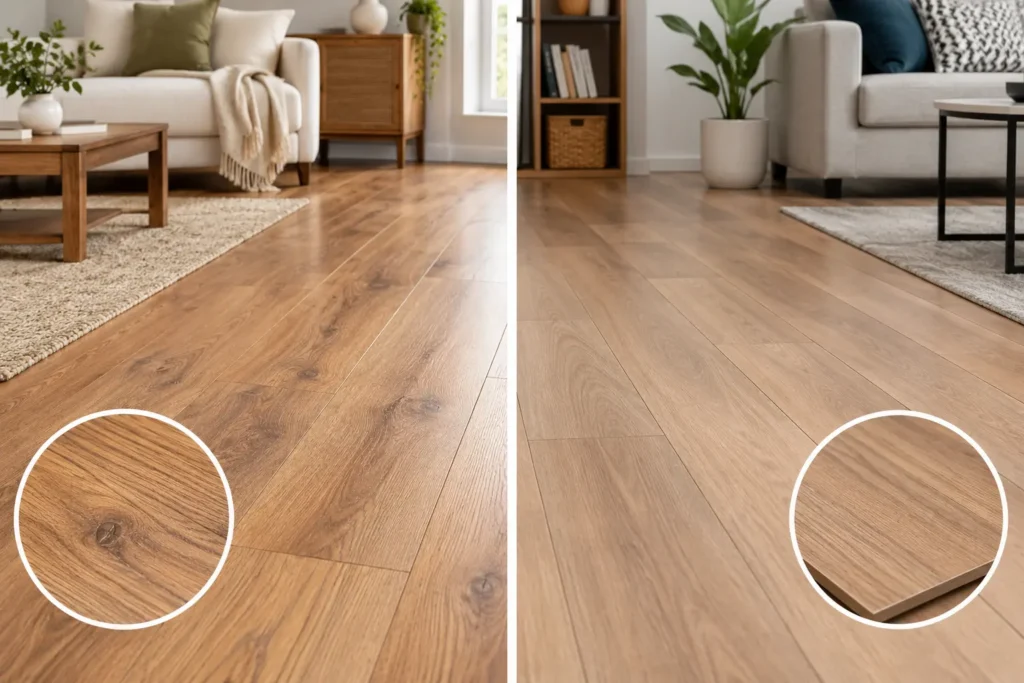
This is almost a tie.
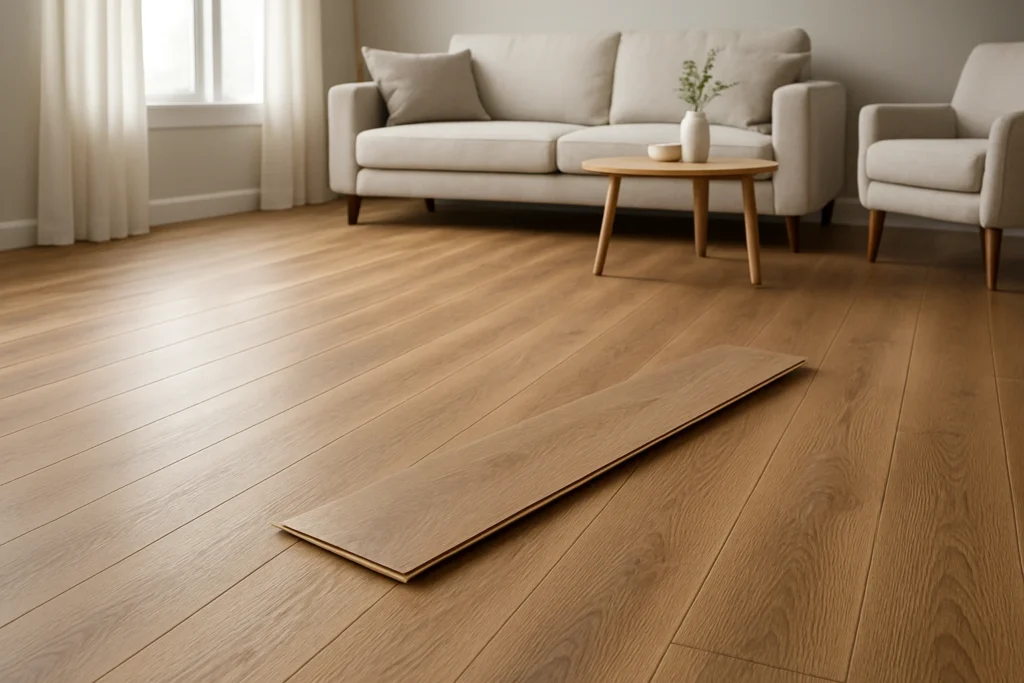
Modern vinyl and laminate have come a long way. Better products use detailed printing, embossed textures, plank variation and realistic colours to reproduce the appearance of natural timber.
Laminate traditionally has an advantage for people who want a more rigid, wood-like feel underfoot.
Vinyl, particularly good-quality LVT and plank flooring, can also look extremely convincing while giving you greater flexibility around moisture.
If appearance is your top priority, don’t choose from a website photograph alone.
Order samples and look at them in your actual room.
Dubai’s strong daylight can make a beige or grey floor look quite different from how it appears under showroom lighting.
Which Is More Comfortable Underfoot?
Vinyl usually has the edge here.
Because vinyl is more resilient and slightly softer, it can feel more forgiving when standing or walking on it for extended periods.
Laminate has a firmer feel. Some people actually prefer this because it feels more solid and stable.
The subfloor and underlayment also make a difference. A well-prepared subfloor with suitable underlayment can improve the feel and acoustic performance of laminate.
So if you spend a lot of time standing in the kitchen, vinyl may be more comfortable. If you prefer a firmer walking surface, laminate may suit you better.
Which Is Easier to Clean?
Both are relatively easy to maintain.
Cleaning Vinyl
Regular sweeping or vacuuming removes sand and grit, while damp mopping with an appropriate cleaner handles routine cleaning. Spills can generally be wiped up easily.
Cleaning Laminate
Laminate also benefits from regular sweeping or vacuuming. A slightly damp mop can be used when appropriate, but excessive water should be avoided unless the particular product is specifically designed to handle it.
This matters in Dubai because dust and fine sand can work their way indoors. Using entrance mats and cleaning grit regularly can help reduce surface wear on either type of flooring.
Which Is Better for Dubai Homes?
For many Dubai homes, the choice comes down to the room.
Choose Vinyl If:
- The room is exposed to water or frequent spills.
- You want a softer surface underfoot.
- Easy cleaning is a priority.
- You want wood or stone looks with stronger moisture resistance.
- You are flooring a kitchen, bathroom or laundry area.
Choose Laminate If:
- You mainly want a realistic wood appearance.
- The room is relatively dry.
- You prefer a firmer floor underfoot.
- Scratch resistance is important and you can choose an appropriate AC-rated product.
- You are flooring bedrooms, living areas, hallways or offices.
For a complete overview of available options, you can also browse flooring solutions for homes and commercial spaces from Online Flooring.
Vinyl vs Laminate for Offices
The decision changes slightly when you are flooring an office.
Think about:
- Number of people using the space
- Office chair movement
- Entrance traffic
- Cleaning frequency
- Water and spill exposure
- Noise
- Appearance
- Expected replacement cycle
Vinyl can be useful in offices where spills, cleaning and heavier daily use are concerns. LVT also provides plenty of design flexibility.
Laminate can work well in offices where a timber appearance is important, particularly when an appropriate commercial-grade product is selected.
For a reception area, meeting room or executive office, the visual character of the floor may carry more weight. For a pantry or area with greater moisture exposure, vinyl becomes more attractive.
Installation Matters More Than Many People Realise
Even a good flooring product can perform poorly when installed over an unsuitable surface.
Before installation, the installer should consider:
- Whether the subfloor is level and stable
- Existing cracks, loose tiles or damaged areas
- Moisture conditions
- Required expansion gaps
- Door clearances
- Transition areas between different floor finishes
- The correct installation method for the chosen product
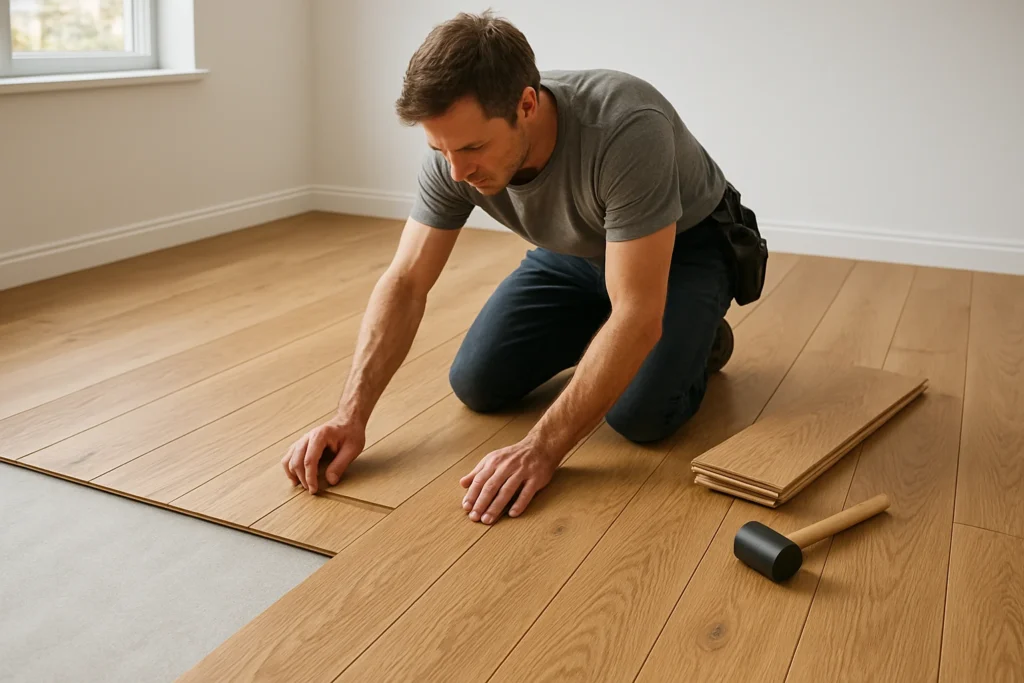
Laminate is commonly installed using a floating click system with suitable underlayment.
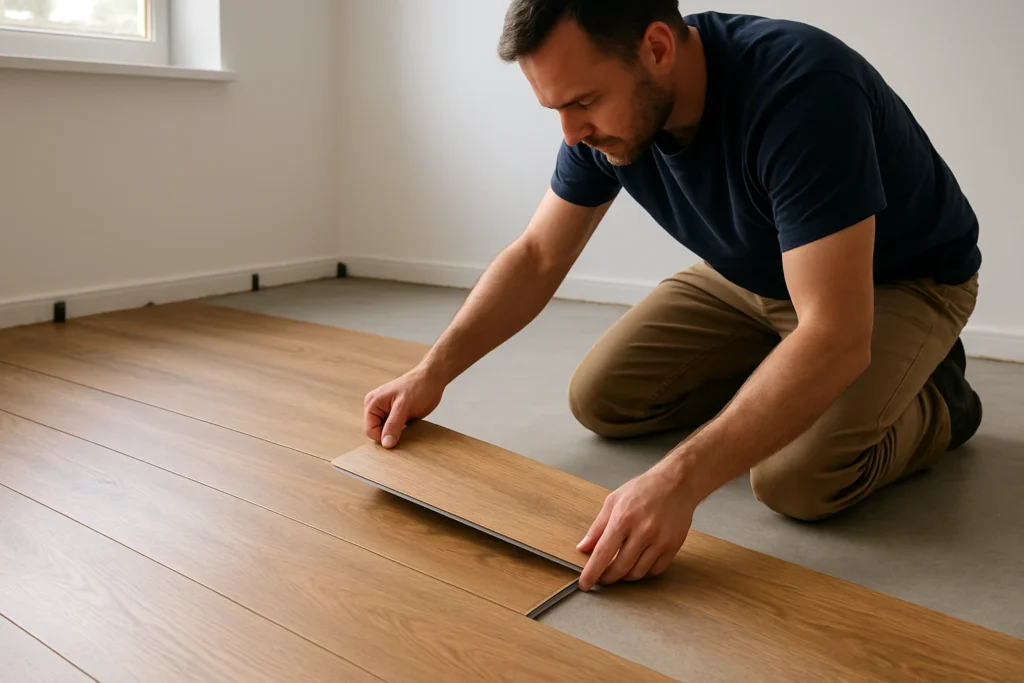
Vinyl can be installed in different ways depending on the product, including click systems, glue-down installation and sheet installation. Online Flooring currently offers these different vinyl formats.
If you are replacing an existing floor, do not assume that the new flooring can simply be placed on top. Some existing tile surfaces may be suitable after inspection and preparation, while uneven or damaged substrates may need additional work.
What About Cost?
Price should be compared on a complete project basis rather than by looking only at the flooring itself.
The final cost can include:
- Flooring material
- Underlayment
- Adhesive, if required
- Subfloor preparation
- Installation
- Skirting or trims
- Removal of existing flooring
- Delivery
- Wastage
Online Flooring currently lists vinyl flooring from around AED 25 per square metre and laminate flooring from around AED 40 per square metre, although actual pricing varies by product, thickness, specification and project requirements.
Treat these as starting points rather than a universal project price. A quotation based on your measurements and selected product gives you a much more useful comparison.
Vinyl Flooring vs Laminate Flooring: Pros and Cons
Vinyl Flooring Pros
- Excellent moisture resistance
- Comfortable underfoot
- Easy to clean
- Available in many designs
- Suitable for busy areas
- Available as planks, tiles and sheets
- Good option for kitchens and bathrooms
Vinyl Flooring Cons
- Quality varies considerably between products
- Some cheaper vinyl can look less realistic
- Heavy furniture can damage poorly selected or installed products
- Subfloor preparation remains important
Laminate Flooring Pros
- Realistic wood appearance
- Firm and stable feel
- Wide choice of colours and plank designs
- Different durability ratings available
- Click installation can be relatively straightforward
- Good choice for dry living areas
Laminate Flooring Cons
- Standard products are more vulnerable to prolonged moisture
- Excess water should generally be avoided
- Damaged boards usually need replacement rather than refinishing
- Product quality varies between manufacturers and specifications
So, Which One Should You Choose?
If you want the shortest possible answer:
Choose vinyl for moisture resistance and everyday practicality. Choose laminate when realistic wood appearance, a firmer feel and dry-room performance are your priorities.
For a Dubai bathroom or kitchen, I would generally look at vinyl first.
For a bedroom, living room or dry office where the look and feel of wood matter most, laminate deserves serious consideration.
And if neither seems quite right, there is another option worth considering. SPC flooring in Dubai combines a rigid core with strong moisture resistance and can be worth comparing with both vinyl and laminate for busy areas.
The best floor is not necessarily the most expensive one. It is the one whose construction matches the room.
Questions to Ask Before Buying
Before ordering any flooring, ask the supplier:
- What is the exact flooring construction?
- Is it suitable for the room where I intend to use it?
- What is the wear layer or AC rating?
- Is it waterproof or only water resistant?
- What underlayment is required?
- Can it be installed over my existing floor?
- How should it be cleaned?
- What warranty applies to the product?
- What does the installation quotation include?
- Are samples available?
These questions can prevent an expensive mistake later.
Final Verdict
There is no universal winner in the vinyl flooring vs laminate flooring debate.
Vinyl is the practical choice when moisture, easy maintenance and underfoot comfort are high priorities. Laminate is a strong option when you want a convincing wood appearance, a firmer feel and dependable performance in dry areas.
The room should make the decision—not the sales label.
Take samples home, check them in natural light, consider how the room is actually used, and compare the full installed cost. If you are still unsure, getting advice based on your subfloor and room conditions is far more useful than choosing from a photograph.
For Dubai homes, offices and commercial spaces, Online Flooring offers both vinyl and laminate flooring options, along with installation services and samples to help you compare products before making a final decision.