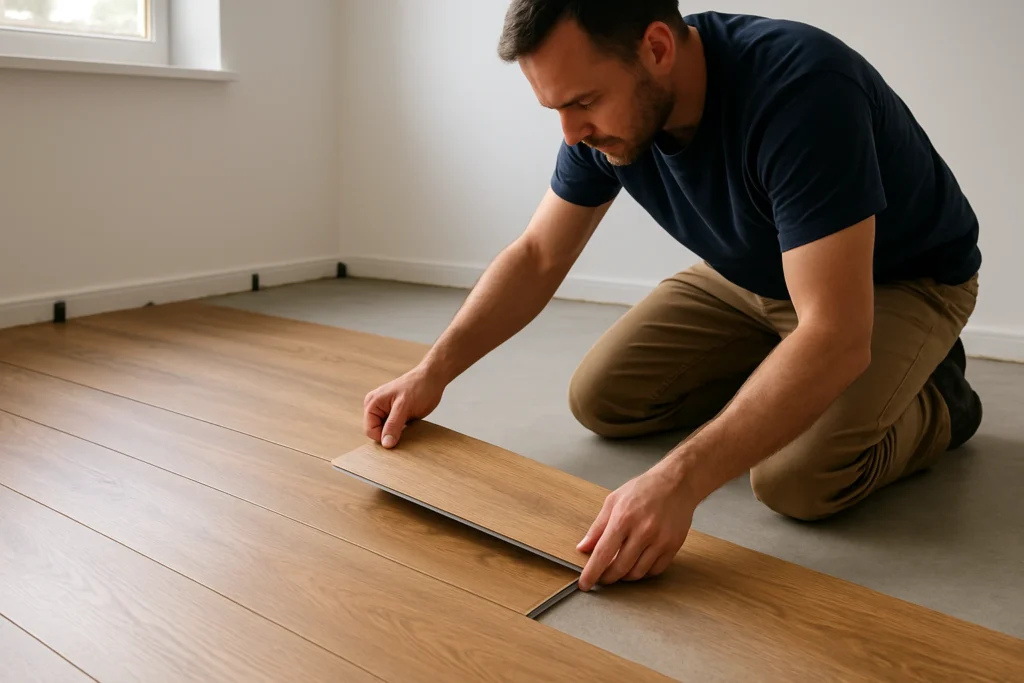


Flooring installation usually takes about 1 to 3 working days for a straightforward room or small apartment, while larger homes and more complex floors can take a week or longer. Carpet and click flooring are often quicker to fit than tile, patterned wood, or floors finished on site. The full schedule must also allow for delivery, old floor removal, floor preparation, any time needed for the flooring to adjust to room conditions, and drying or curing before normal use.
How Long Does Flooring Installation Take by Material?
For a clear room of roughly 20 to 30 square metres, fitting can take less than a day for carpet or several days for tile and detailed wood patterns. The estimates below cover installation on a prepared base, not the full time from placing an order to moving furniture back.

| Flooring Type | Approximate Fitting Time for 20 to 30 Square Metres | What Can Add Time |
|---|---|---|
| Carpet | Half a day to 1 day | Old carpet removal, underlay, seams, stairs, and moving furniture |
| Click vinyl or SPC | 1 to 2 days | Uneven base, door cuts, awkward edges, and connected rooms |
| Laminate | 1 to 2 days | Required acclimation before fitting, underlay, and doorway details |
| Glue-down luxury vinyl | 1 to 2 days | Smoothing the base, adhesive working times, and curing |
| Engineered wood in straight rows | 1 to 3 days | Glue-down fitting, layout, moisture checks, and edge details |
| Ceramic or porcelain tile | 2 to 4 days | Cuts, adhesive setting, grouting, and room layout |
| Chevron or herringbone wood | 2 to 4 days or more | Setting out the pattern, extra cuts, borders, and alignment |
These are planning ranges for a professional crew, not guaranteed completion times. A small bathroom can take longer per square metre than a large bedroom because pipes, corners, and fittings mean more cuts.
For carpet flooring in Dubai, a simple bedroom can be a short job, but stairs need much more measuring and fitting. With flooring tiles, laying the tiles is only part of the schedule because adhesive and grout need time to set before normal use.
The fitting method matters as much as the material. The comparison of SPC flooring and LVT flooring helps explain why a rigid click floor and a flexible glued floor may need different preparation and work schedules.
Ask Online Flooring for a schedule based on the actual product, floor condition, and room layout rather than area alone.
What Happens Before the New Floor Goes Down?
The full flooring installation schedule includes checks and preparation before any boards, tiles, or carpet are fitted. A fast installation is only realistic when the base is ready and the room conditions meet the product’s requirements.

A complete job usually follows this order. Some stages can overlap, while others cannot start until the installer has checked and approved the previous work.
- Survey and measure. The installer checks the area, floor height, doors, skirting boards, and joins between rooms. Material availability and building access should be confirmed at this stage.
- Remove the old floor if needed. Carpet may lift quickly, while bonded wood, tile, or old adhesive can take much longer to remove. Waste removal also needs space and access.
- Check and prepare the base. The subfloor, which is the supporting surface beneath the floor covering, must be sound, clean, dry enough, and flat enough for the chosen product.
- Allow required acclimation. Some flooring needs time in the room before fitting so it can adjust to the indoor conditions. Follow the product instructions for the waiting time, storage method, and room conditions, as there is no single rule for all floors.
- Fit the flooring and finish the edges. This includes cuts, trims, doorway bars, and any agreed work on skirting boards or doors.
- Allow drying or curing before use. Adhesives, grout, and finishes applied on site each have their own limits for walking, furniture, cleaning, and heavy loads.
In Dubai, plan to have the air conditioning running at normal indoor settings before, during, and after fitting, as required by the product instructions. Flooring stored in a hot vehicle or fitted in a building without stable cooling may not be ready to install just because it has been delivered.
For a glued sheet material such as linoleum flooring, allow time for careful base preparation and the specified adhesive process. Do not treat a quick delivery date as proof that installation can start that day.
What Makes Flooring Installation Take Longer?
Floor preparation, difficult layouts, and restricted access often add more time than laying the floor itself. If the old floor hides damage, the installer may only be able to give a firm completion date after removal and inspection.

Check these common causes of delays before the crew arrives:
- Low or high spots in the base. A floor can look level yet still have dips that affect the new covering. Click joints may flex over gaps, while thin glued vinyl can show flaws in the surface underneath. Grinding or a smoothing compound may be needed.
- Moisture above the product limit. Concrete that looks dry can still hold too much moisture for flooring or adhesive. Testing, further drying, or a suitable moisture-control system can change the schedule.
- New screed or smoothing compound. Screed is a layer used to form or level the base. A surface that is firm enough to walk on is not always dry enough to cover, so follow the material’s instructions for covering times and moisture checks.
- Many small rooms or detailed patterns. Hallways, cupboards, columns, and doorways add cuts and layout work. Chevron flooring also needs careful alignment, so you should not expect it to go down as quickly as straight plank rows.
- Occupied rooms. Moving furniture from one side to the other slows the crew and can limit where they can start laying a continuous floor. A cleared room usually gives better access and a more reliable schedule.
- Building restrictions. Apartment rules may limit noisy work, lift use, waste removal, or delivery hours. Confirm any work permit and loading arrangements before booking the start date.
A common mistake is assuming a floating floor can simply cover every flaw in the existing surface. Underlay is not a substitute for proper repairs, and a thicker underlay can even cause problems if it is not approved for the flooring.
For office flooring, working in stages may keep part of the business open, but it can extend the total job. Moving desks, protecting work areas, and fitting around occupied rooms all take time that an estimate for an empty space does not include.
How Long Does It Take to Floor a 100-Square-Metre Apartment?
For a roughly 100-square-metre apartment, straightforward click flooring may take around 3 to 5 working days to fit once the base is ready. The full on-site job can take about a week or more when removal and preparation are needed, while delivery waits and unexpected repairs can extend it further.
The following is a planning example, not a promised schedule. It assumes an empty apartment, materials already on site, simple straight rows, normal access, and no major moisture problem.
| Stage | Example Allowance | What Must Be Confirmed |
|---|---|---|
| Remove old flooring and clear waste | 1 to 2 working days | Whether the old covering is loose, glued, or tiled |
| Inspect and prepare the base | 1 to 2 working days of work, plus any drying time | Flatness, moisture, repairs, and the chosen preparation product |
| Fit click flooring across the apartment | 3 to 5 working days | Crew size, number of rooms, cuts, and continuous runs |
| Complete trims and handover checks | Often within the fitting period, sometimes longer | Door work, skirting, transition strips, and final details |
| Return furniture | Product-specific | Any adhesive used for trims or other parts of the installation |
Do not simply add up every row. Some preparation may happen room by room while other work continues, but a drying stage can stop the next step completely.
For example, if a crew starts removal on Monday and finds a base that needs smoothing, a Friday move-in may no longer be sensible. The extra time includes both applying the compound and waiting until it is ready to cover, based on the product instructions and actual room conditions.
Whole-home tile, glued wood, or wood sanded and finished on site needs a different plan. Site-finished wood needs sanding and finish coats after fitting, followed by the finish maker’s waiting period, so the fitting date is not the move-in date.
Ask for the schedule to show both working days and calendar days. A Friday finish followed by a required waiting period and a weekend can delay the return of furniture, even when the installation itself stays on time.
When Can You Walk on New Flooring and Move Furniture Back?
You can often walk on a completed floating click floor soon after fitting, but glued flooring, tile, and freshly finished wood need waiting times set by the product instructions. Permission for light foot traffic does not mean the floor is also ready for furniture, wheeled chairs, rugs, or wet cleaning.
| Floor or Fitting Method | What Controls the Return to Use? | What to Confirm at Handover |
|---|---|---|
| Floating click floor | Completion of fitting and any separately glued trims | When furniture can return and how to protect the floor |
| Stretched carpet | Completion of stretching, fixing, and edge work | Whether any glued sections need more time |
| Glue-down vinyl, wood, or linoleum | Adhesive curing under the room conditions | Separate times for walking, heavy loads, and wet cleaning |
| Ceramic or porcelain tile | Adhesive and grout instructions | When walking, furniture, and water exposure are allowed |
| Wood finished on site | The finish system and its curing schedule | When shoes, furniture, rugs, and cleaning are allowed |
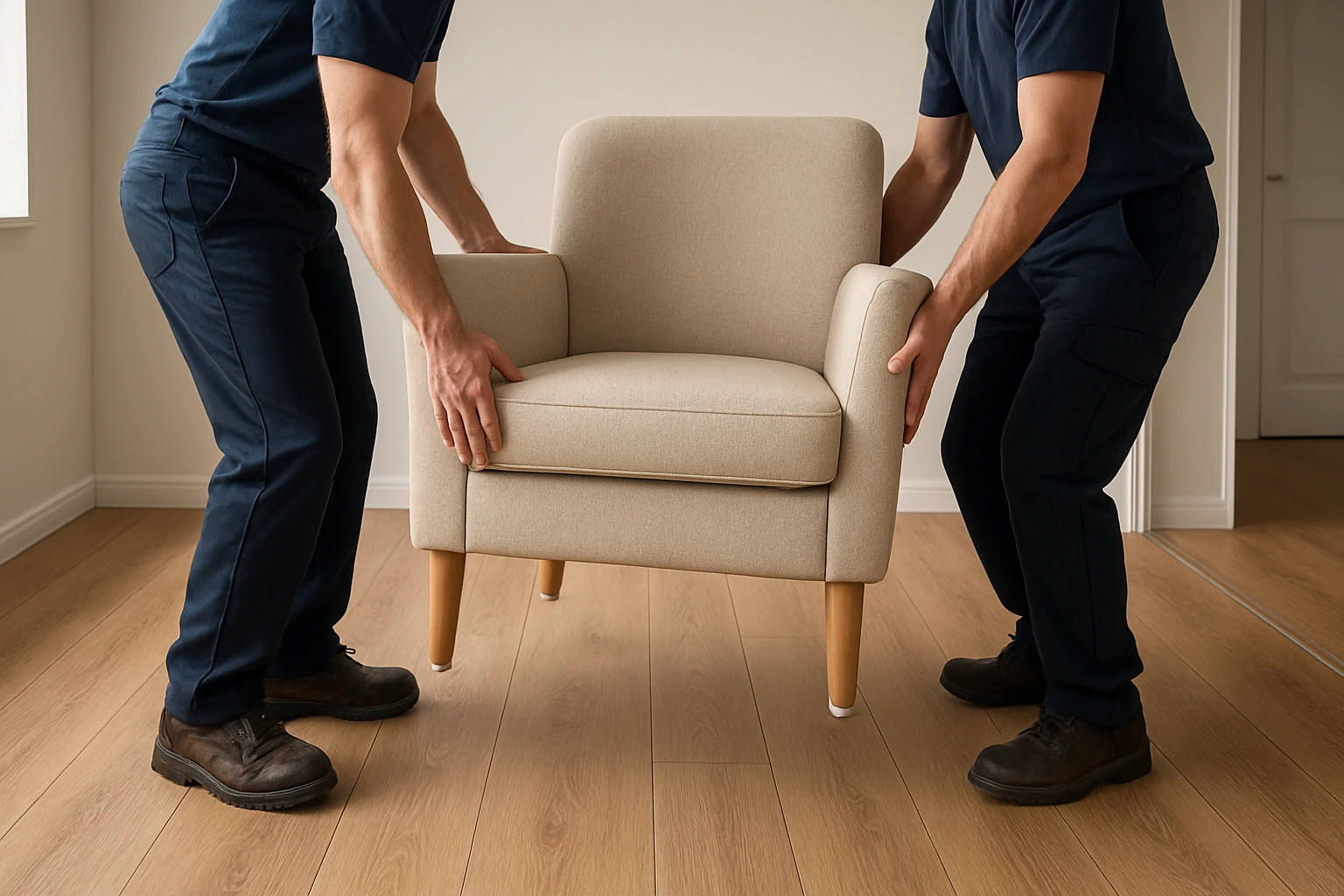
A floor may feel firm before the adhesive has enough strength to hold a heavy load. Moving an appliance or rolling a trolley across it too early can shift the covering or damage the bond beneath it.
Lift furniture rather than dragging it, and fit suitable pads to the feet. Heavy appliances may need a moving method that spreads the load without scraping the surface, so ask the installer before moving them across a new floor.
Get the use restrictions in writing and keep them with the care instructions. Check the product warranty as well, since installation and care requirements may affect coverage. Never assume that a faster-setting adhesive or grout makes the whole floor ready sooner unless the instructions for all materials used allow it.
How Can You Keep the Flooring Job on Schedule?
The best way to avoid delays is to confirm the product, base condition, access, and room clearance before the start date. A written schedule should separate fitting time from drying time and state what happens if removal reveals damage.
Start by confirming the final material rather than booking around a sample you have not yet approved. A free flooring sample can help you check the colour and surface before ordering, which reduces the chance of changing the product after delivery has been arranged.
Before the crew arrives:
- Confirm stock, delivery, and the exact product’s storage and acclimation rules.
- Agree who removes furniture, appliances, doors, and the old flooring, and who takes away the waste.
- Arrange building approval, lift bookings, parking, and allowed work hours where needed.
- Clear cupboards and fragile items, and plan a safe route through the home.
- Complete messy overhead work first, and agree when skirting work and paint touch-ups will happen.
- Ask for separate dates for fitting completion, light walking, furniture return, and normal cleaning.
If you plan to stay in the home, agree on the room order before work starts. Keeping a bedroom available may be possible, but it can add visits or break the installation into smaller stages. Children and pets need a separate area away from tools, open adhesives, and unfinished edges.
A professional survey is especially useful when the quote depends on keeping the existing floor underneath. The guide to hiring professional flooring installers in Dubai explains why preparation and fitting checks matter, not just the speed of laying boards.
When requesting flooring installation in Dubai, give the room area, chosen material, photos of the existing floor, and any access limits. Ask for a target completion date with clear conditions, not just a promise that the crew can lay a certain number of square metres per day. If your move-in date is fixed, leave some extra time after the floor is expected to be ready for use rather than scheduling furniture delivery for the moment fitting ends.
Frequently Asked Questions
Can I Install New Flooring Over Existing Tiles to Save Time?
New flooring can sometimes go over existing tiles if the chosen product allows it and the tiles are firmly bonded, dry, and flat enough. Loose tiles, deep grout lines, and height changes may need work first. The installer should also check door clearance and transitions, because saving removal time can create problems elsewhere.
How Much Longer Does DIY Flooring Installation Take?
DIY flooring installation often takes longer than professional fitting, but there is no reliable multiplier for every room. First-time installers need extra time for layout, tool setup, doorway cuts, and correcting mistakes. If your deadline is fixed, plan around the whole job rather than the time needed to click the main rows together.
Will a Larger Installation Crew Finish the Floor Sooner?
A larger crew can shorten some fitting work, but it cannot shorten required drying, acclimation, or curing times. Extra workers help most when several clear rooms can be prepared or fitted at once. In a narrow hallway or a small bathroom, limited space may prevent more people from making useful progress.
How Long Will New Flooring Smell After Installation?
New flooring smells may fade over several days, but the duration depends on the material, adhesive, ventilation, and room conditions. Smell alone does not show whether a room is ready for use, so follow the product’s ventilation and occupancy guidance. If the smell is strong, persists, or causes irritation, contact the installer or supplier.
Does Underfloor Heating Change the Installation Schedule?
Underfloor heating can change the schedule because the heating system and flooring may require a set shutdown, testing, and restart process. The floor and adhesive must both be approved for the system. Follow the product instructions for temperature limits and gradual restart rather than switching the heating on to speed up drying.